of children in the Philippines
have experienced three or more kinds of environmental shock, hazard or stress.
A letter about the world our children will inherit
Dear parent, grandparent, aunt, uncle, teacher, neighbour, and anyone who has ever loved a child: I need to ask you to look at this with me.
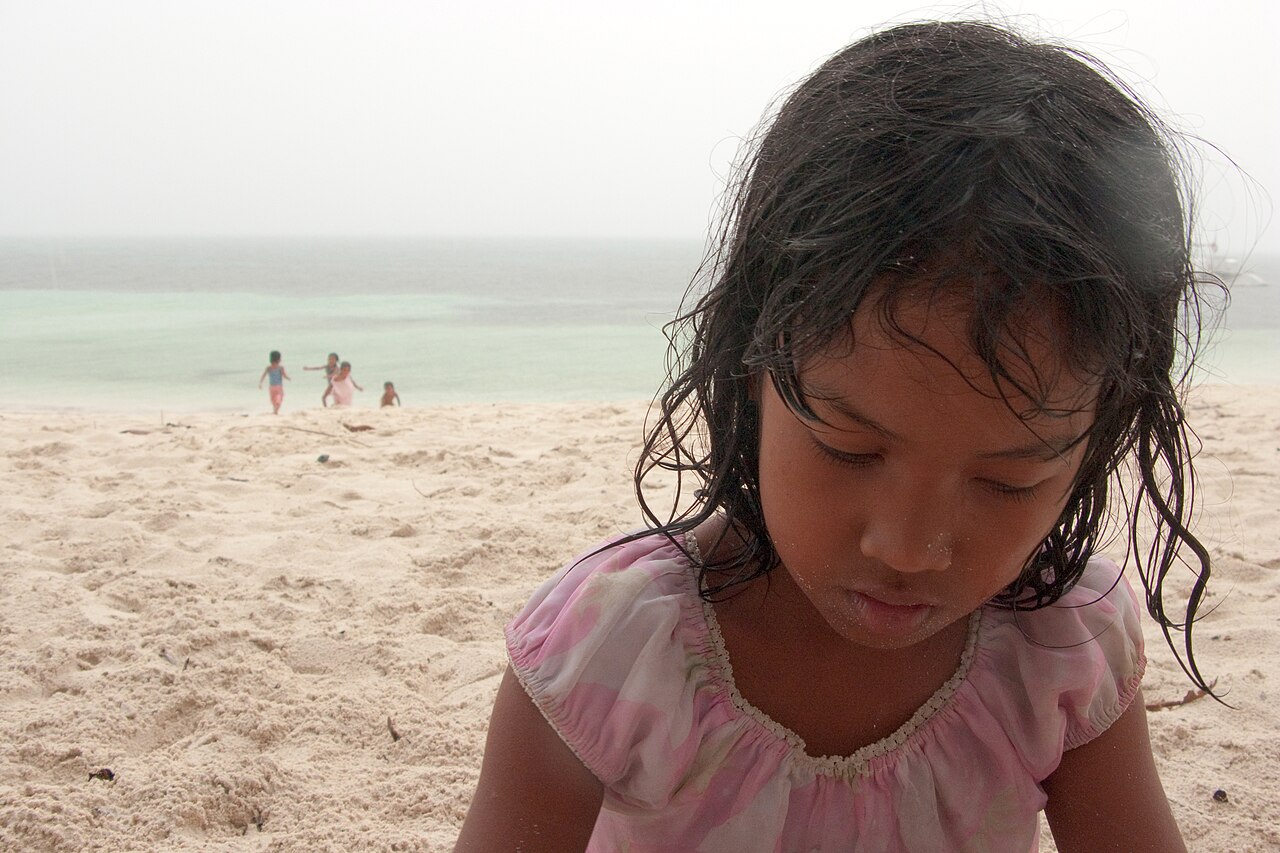
Begin with your own storyMalapascua Island, Philippines. Vyacheslav Argenberg, CC BY 4.0
Before I show you the numbers
I do not want to speak to you as a statistic. Choose the two statements that are true for you. Nothing is saved. This page will simply speak from where you are.
Wherever you are standing, this story reaches you. Some of us know floodwater by its smell and the mark it leaves on a wall. Others know it only through a screen. Both can choose to care before the next family loses what should have kept them safe.
This is personal for me
When I see another flooded home in the Philippines, I do not see only water. I see a child trying to sleep somewhere unfamiliar. I see a parent deciding what can be saved. I see school books, medicine, photographs and ordinary safety lifted out of reach.
Climate change does not invent every storm or every flood. It changes the conditions around them: hotter air, rising seas, shifting rainfall and risks that can arrive together. And it places the heaviest burden on people who contributed least to the problem and have the fewest choices when danger comes.
If you are raising a child now, the year 2050 is not distant. It is part of their adulthood. The year 2100 is not science fiction. A child born in 2020 could be eighty years old then.
What the evidence says
have experienced three or more kinds of environmental shock, hazard or stress.
by environmental hazards between 2016 and 2021, according to UNICEF Philippines.
is vulnerable to climate-induced disasters and hazards.
enter the Philippine Area of Responsibility in an average year.
Evidence: UNICEF Philippines and PAGASA.
A child is a measure of time
The Intergovernmental Panel on Climate Change is clear: delay increases the risks children face from flooding, heat, water scarcity, poverty and hunger. Immediate action can still prevent more severe harm.
Source: IPCC: how climate change will affect today’s children.
Why the Philippines
PAGASA warns that continued warming, changing rainfall, rising seas, tropical cyclones and storm surges can combine to increase threats to life and property in coastal communities.
This does not mean the Philippines is helpless. It means adaptation cannot be an afterthought. Safer shelter, clean water, local food, reliable energy and community knowledge need to work together before disaster arrives.
Read PAGASA’s climate projectionsWhat we can choose next
We cannot promise a world without storms. We can help create homes and communities that are harder to uproot, systems that recover faster, and knowledge that is shared instead of guarded.
BGM2030 begins with one Philippine pilot: a place to listen, test and learn how flood-adapted shelter, water, food, energy, aquaculture and livelihood can strengthen one another. It is not a finished answer. It is a serious question we want communities and qualified experts to answer together.
One day, a child may ask what we did when we understood. I want us to have an answer.
One million people choosing to care can become a circle of ideas, skills, introductions and public support. I would feel proud to be part of that with you.
Add my name to BayanihanFree to join. Choose at least one way to help. No donation is collected today.